Underseat Personal Item Bag
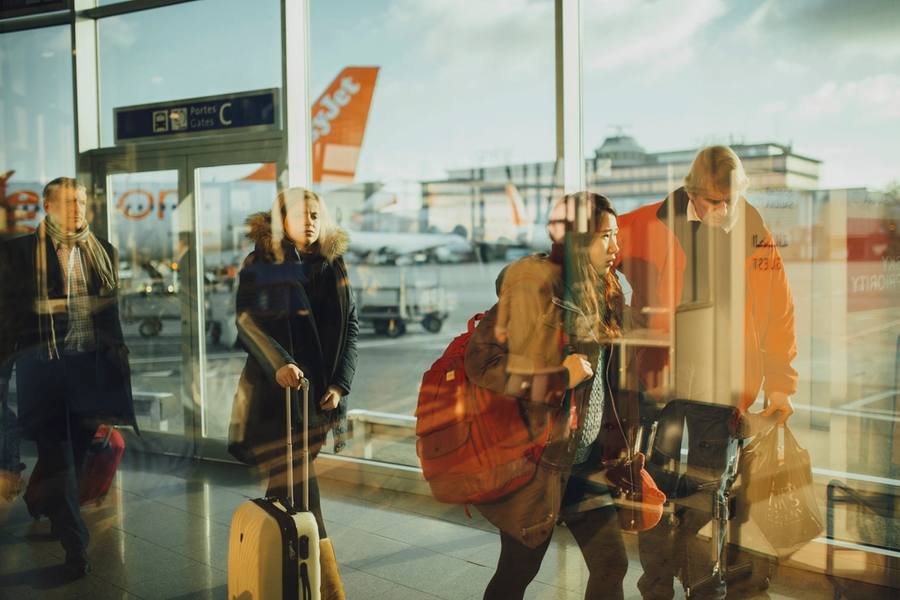
Representative image (stock photo); not the exact product.
Frequently The Only Free Allowance
Many budget fares now include only a small personal item, with a full cabin bag costing extra, which makes the underseat bag the entire free allowance.
That has made the category considerably more important than it was, and packing a trip into one is a genuine skill worth developing.
For a short trip it is entirely achievable, and the saving across a family on a return flight is substantial.
Size Limits Are Enforced
Personal item dimensions are smaller and enforced more consistently than cabin bag limits, since the space under a seat is genuinely fixed.
A bag advertised as fitting a specific airline should be checked against current published dimensions rather than trusted, since limits change.
Soft bags that compress have an advantage here, since a slightly oversized soft bag squeezes into a sizer where a rigid one does not.
Access While Seated
A bag under the seat in front is the only luggage reachable during a flight, which makes organisation inside it considerably more important than in a case.
Pockets for a phone, headphones, a book, documents and medication mean not having to unpack the whole bag in a cramped space.
A bag that opens flat rather than through a narrow top opening is far easier to use in the space available.
Shape matters as much as stated dimensions, since the space under an aircraft seat is restricted by a bar and by the seat legs, and a bag that is technically within limits but rigid and square may not slide into the actual gap. A softer bag with a slightly tapered profile fits where a boxy one of identical measurements will not.
Comfort Carrying It
A small bag is carried rather than wheeled, which for anything heavy through a long terminal becomes uncomfortable quickly.
Backpack straps distribute weight far better than a single shoulder strap, and a padded strap matters more than the bag capacity does.
Some have a strap that slides over a suitcase handle, which for anybody also carrying a case is genuinely useful.
Packing Into The Space
Compression, rolling clothes and packing cubes all matter considerably more in a small bag than in a case, where inefficiency is absorbed by spare volume.
Wearing the bulkiest items rather than packing them — a coat, boots, a jumper — is the standard technique and makes a genuine difference.
Liquids still face security restrictions regardless of bag size, and a small bag makes the separate liquids bag more awkward rather than less.
Weight limits apply to personal items on some airlines even when dimensions are the constraint on others, and a small bag packed with heavy items can exceed a stated limit while fitting the sizer perfectly. Checking whether the airline states a weight for personal items as well as dimensions is worth doing, since the two are enforced separately and passing one does not mean passing the other.
The Verdict
The most important bag on many fares, where organisation and compression matter more than raw capacity.
Size limits are enforced strictly, heavy bags are uncomfortable without backpack straps, and access while seated depends on internal organisation.
Choose something soft that compresses. A rigid bag at the limit fails a sizer that a soft one squeezes into.
At a glance
Pros
- Often the only free allowance on budget fares
- Reachable during the flight, unlike overhead bags
- Soft versions compress into tight sizers
- Backpack straps distribute weight properly
Cons
- Size limits enforced more strictly than cabin bags
- Uncomfortable if heavy without proper straps
- Narrow openings are awkward in a cramped space
- Liquids restrictions apply regardless of size
Frequently asked questions
Why does this bag matter so much now?
Many budget fares include only a small personal item, with a full cabin bag costing extra. That makes it the entire free allowance, and packing a short trip into one saves a substantial amount across a family return flight.
Will it pass the sizer?
Check current published dimensions rather than trusting an advertised airline compatibility, since limits change. Soft bags that compress have a real advantage, because a slightly oversized soft bag squeezes into a sizer where a rigid one cannot.
What should I look for inside?
Pockets for phone, headphones, book, documents and medication, since this is the only bag reachable during the flight. And an opening that lets the bag lie flat rather than a narrow top, which is awkward in a cramped seat.
Specifications
| Type | Underseat personal item bag |
| Importance | Often the only free allowance |
| Limits | Smaller and more strictly enforced |
| Material | Soft compresses into sizers |
| Access | Only bag reachable in flight |
| Opening | Flat opening easier than narrow top |
| Carrying | Backpack straps over shoulder strap |
| Useful feature | Pass-through for a case handle |
The bottom line
Often the only free allowance now. Choose something soft that compresses, with pockets you can reach while seated.
Check Price on Amazon